
Digital Credential Manager
October 2022 - February 2023
We designed an internal application for state employees to manage citizens' digital credentials within a credential wallet. This initiative emerged in response to the COVID-19 pandemic, addressing the need for secure, verifiable digital proof—such as vaccination records—for citizens.
Defining User Roles And Permissions
We started by analyzing the five user types with access to the digital credential manager, documenting the information and actions each would need. These user permissions then guided our process flows and designs, ensuring intuitive experiences tailored to each role.
Roles:
System Administrator
Agency Administrator
Credential Builder
Credential Clerk
Reporter
User Journeys
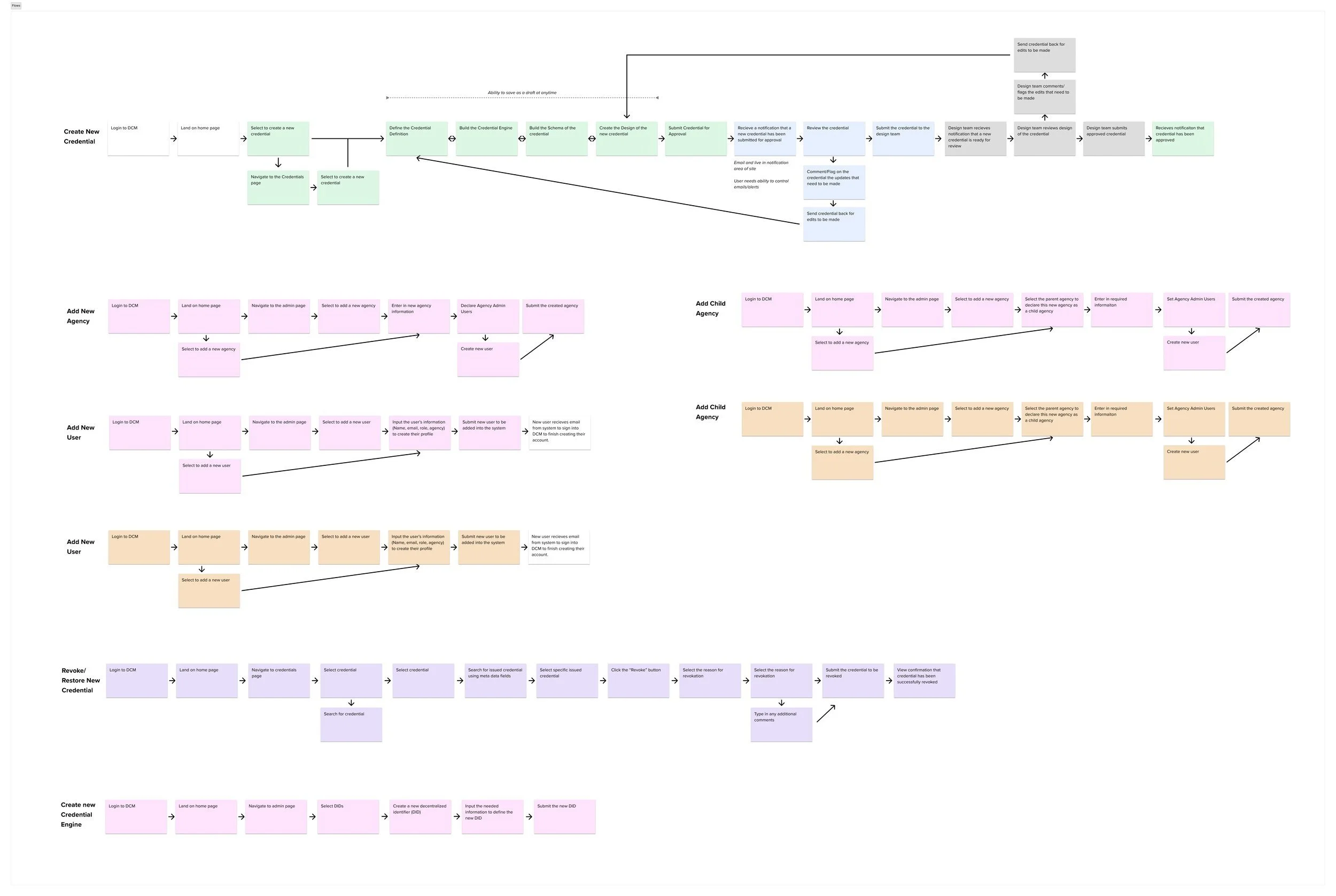
Key User Journeys Created:
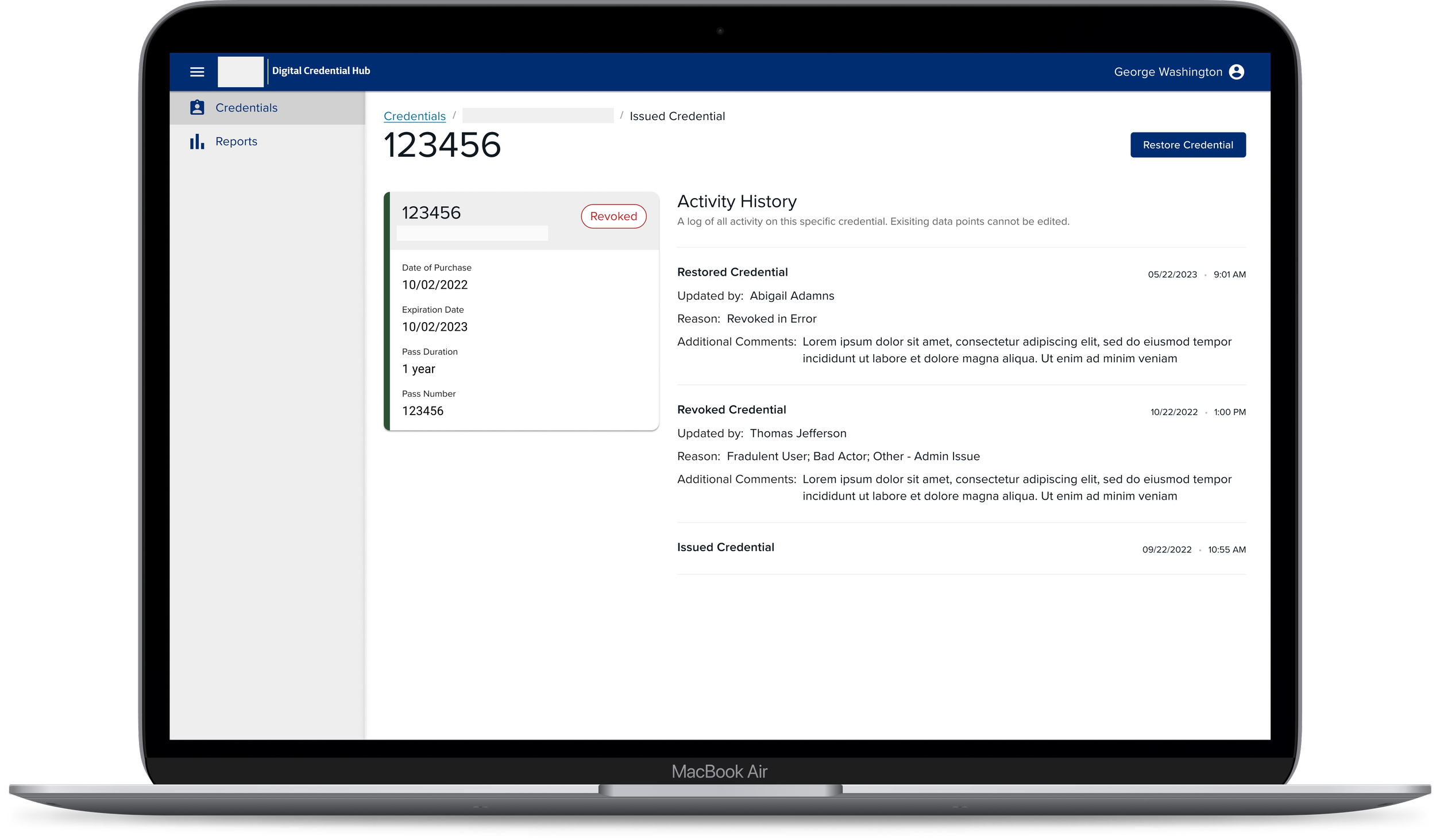
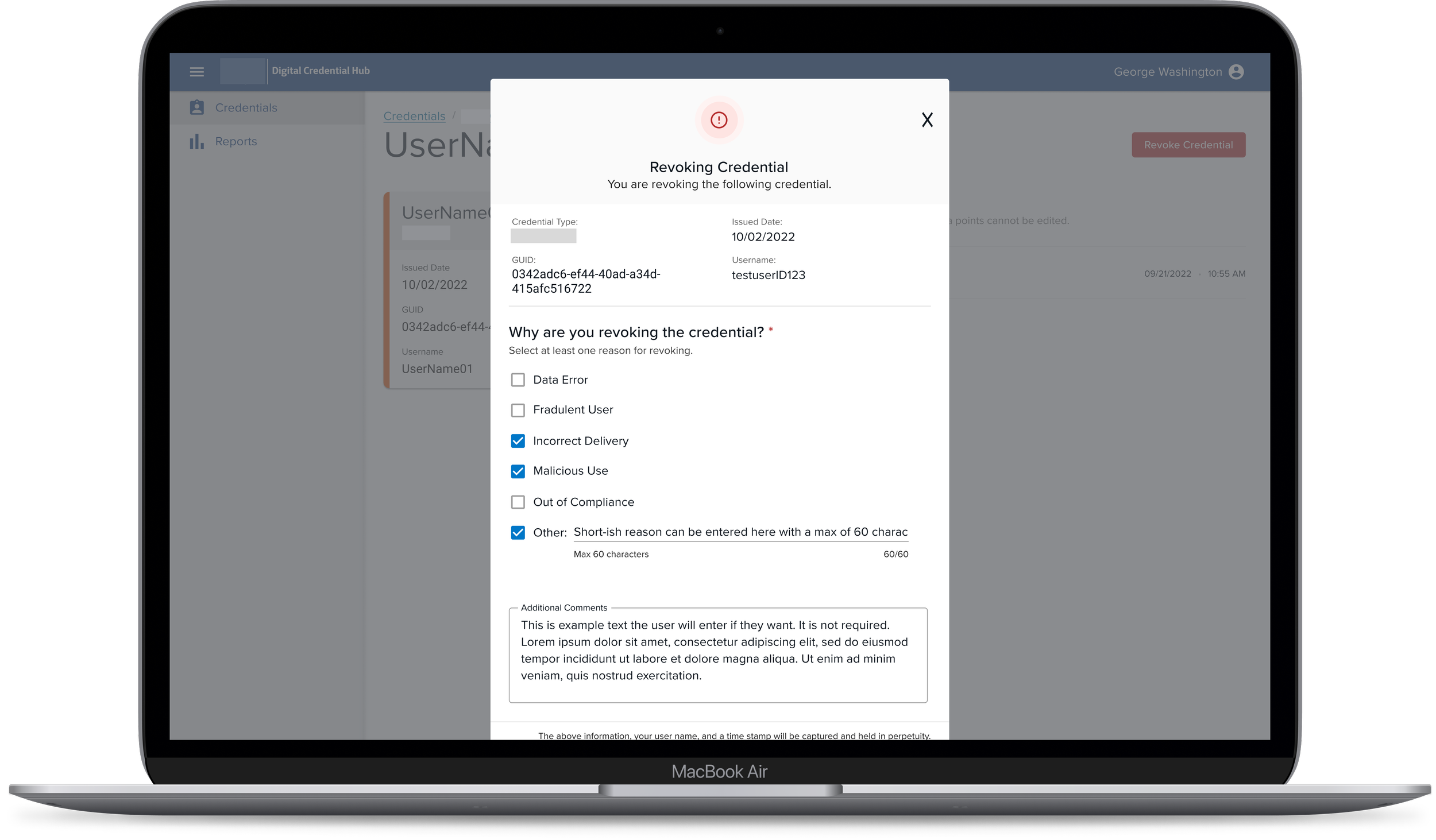
Revoking and restoring credentials
Creating a new credential
Creating a new agency
Adding a new user
We developed user journeys for each key task in the digital credential manager, which helped define the requirements and flow of screens needed for users to complete their tasks efficiently.
Design System Creation
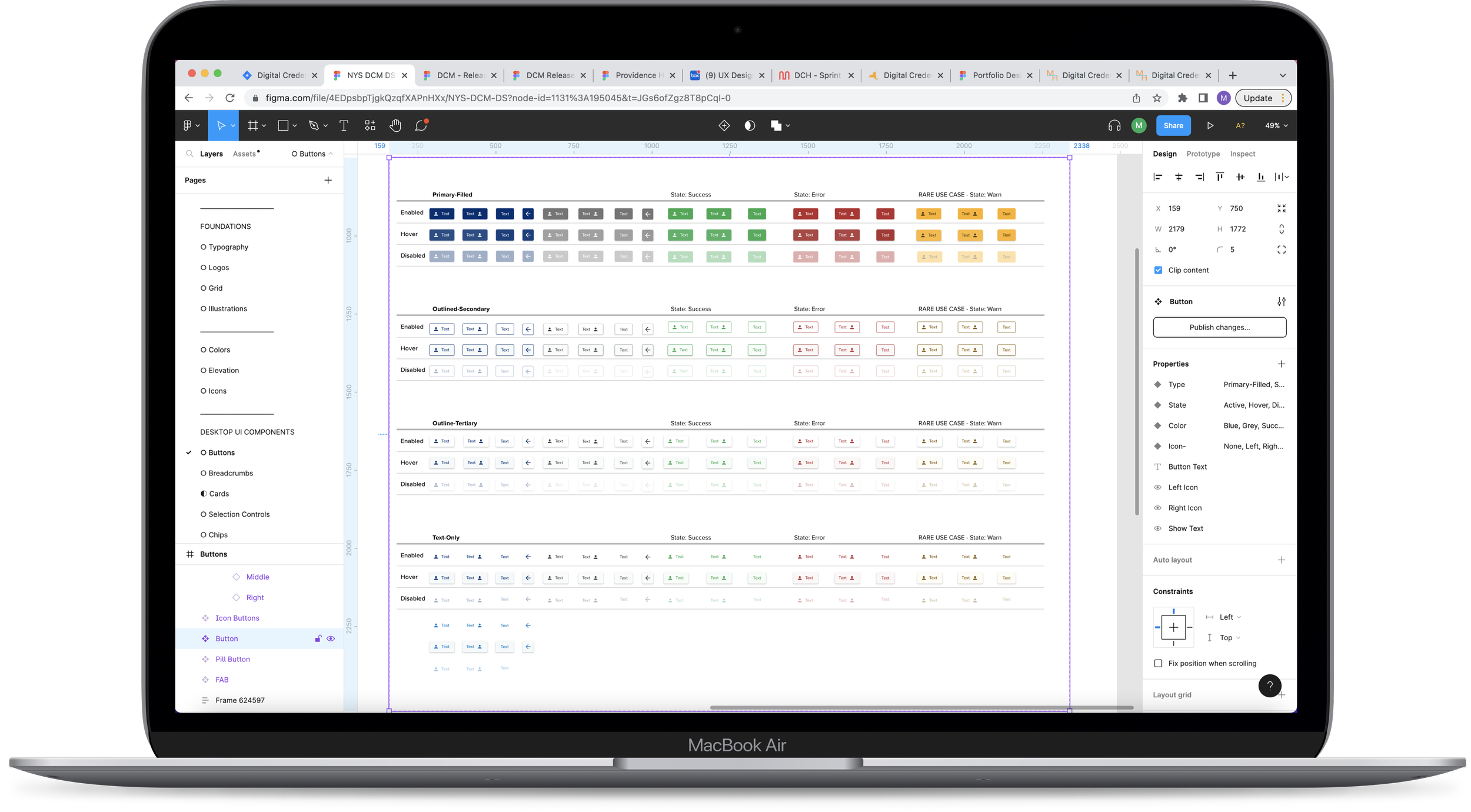
For this project, we developed a custom design system for the client, who was still building their design practice. The system was designed to support the digital credential manager and future initiatives, ensuring a consistent look and feel across all products.
Low Fidelity Wireframes
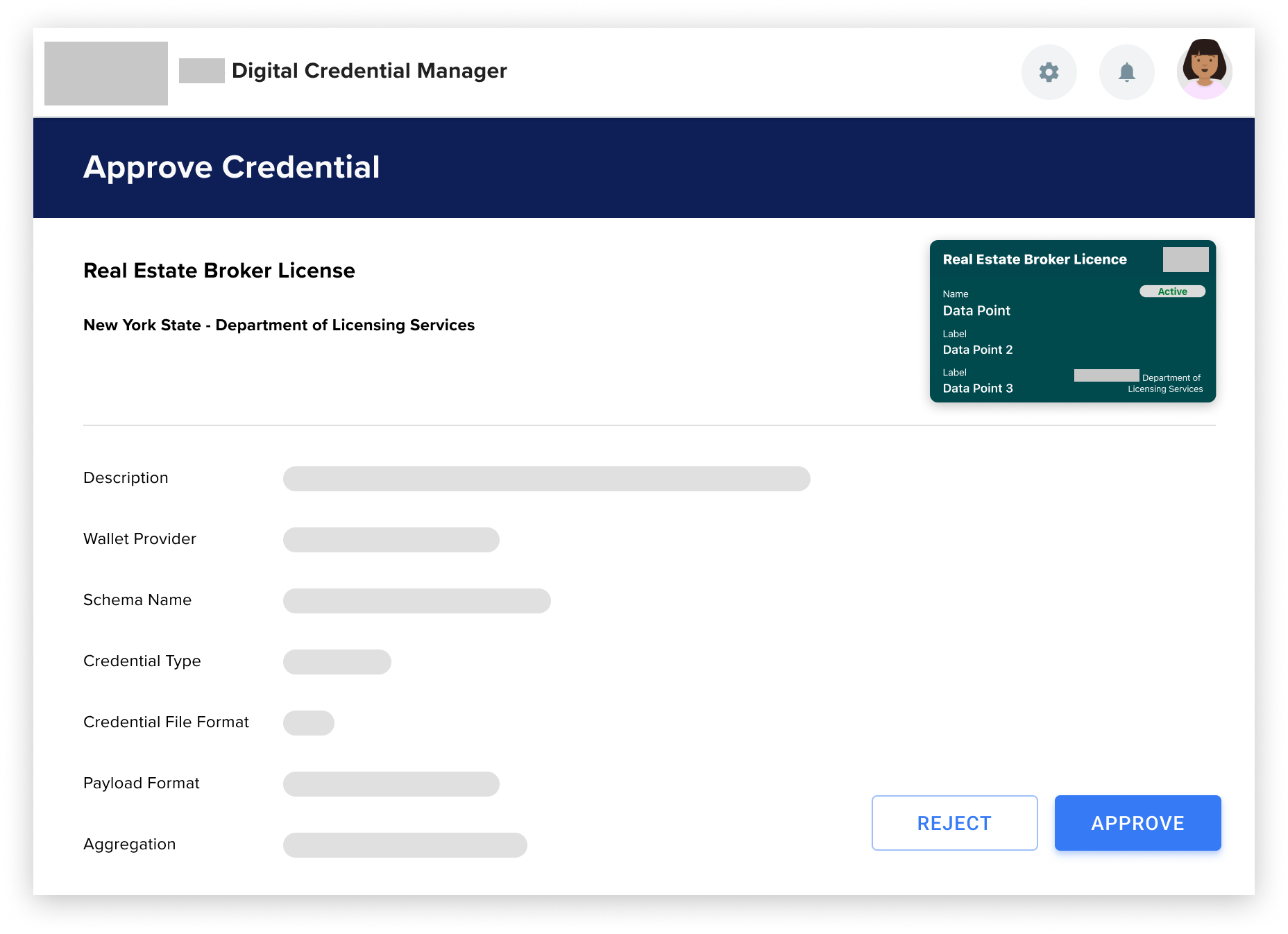
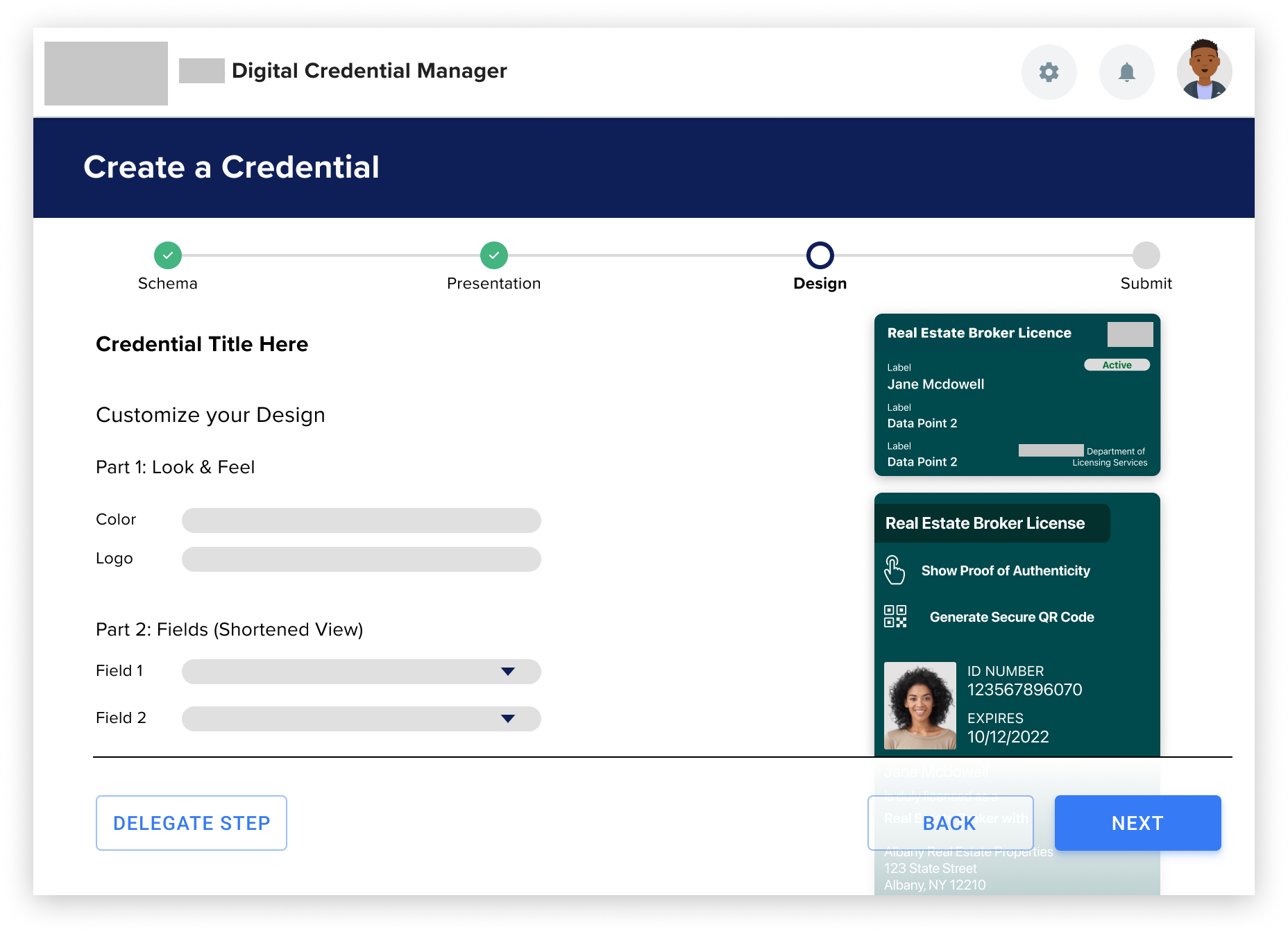
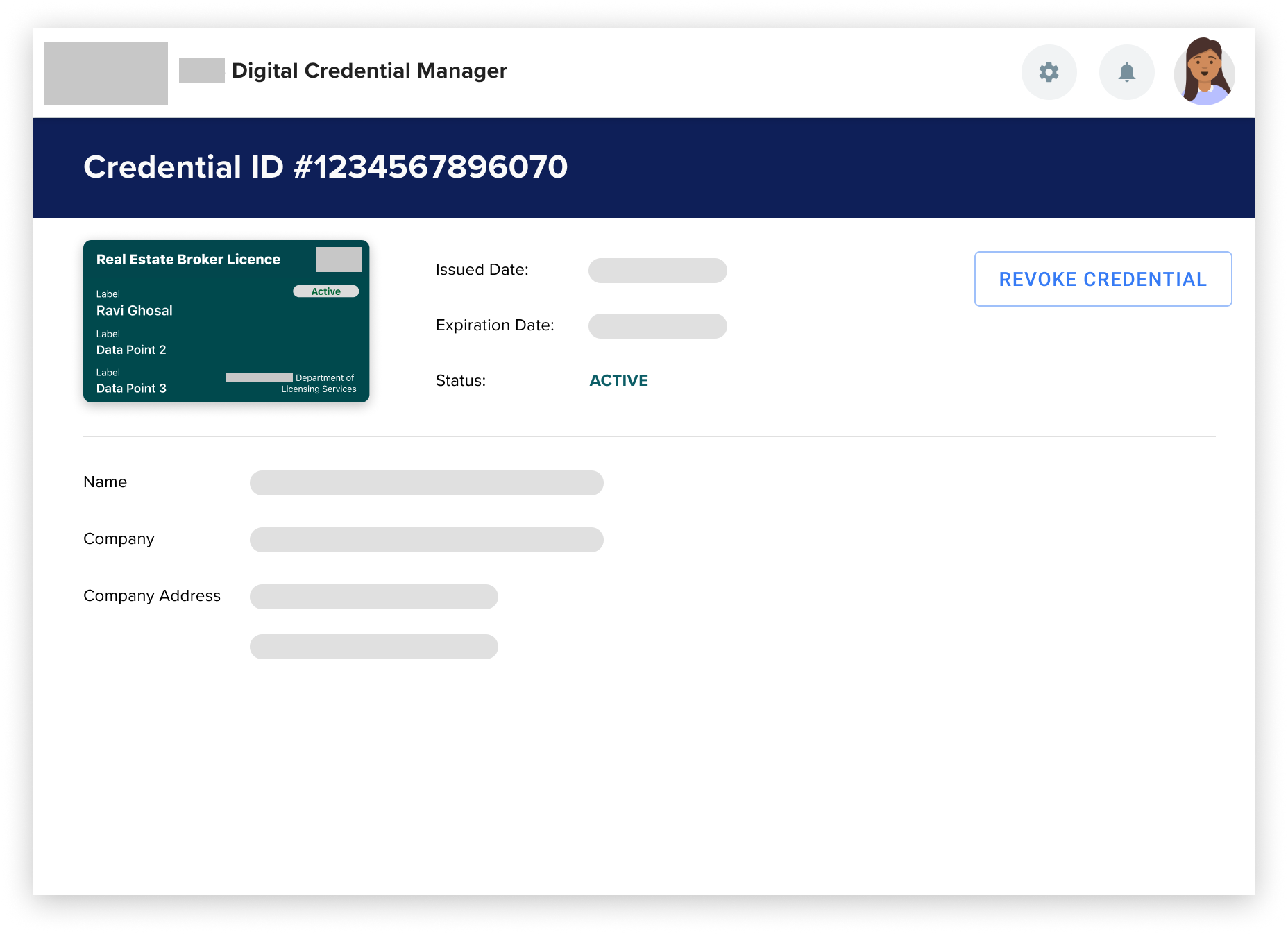
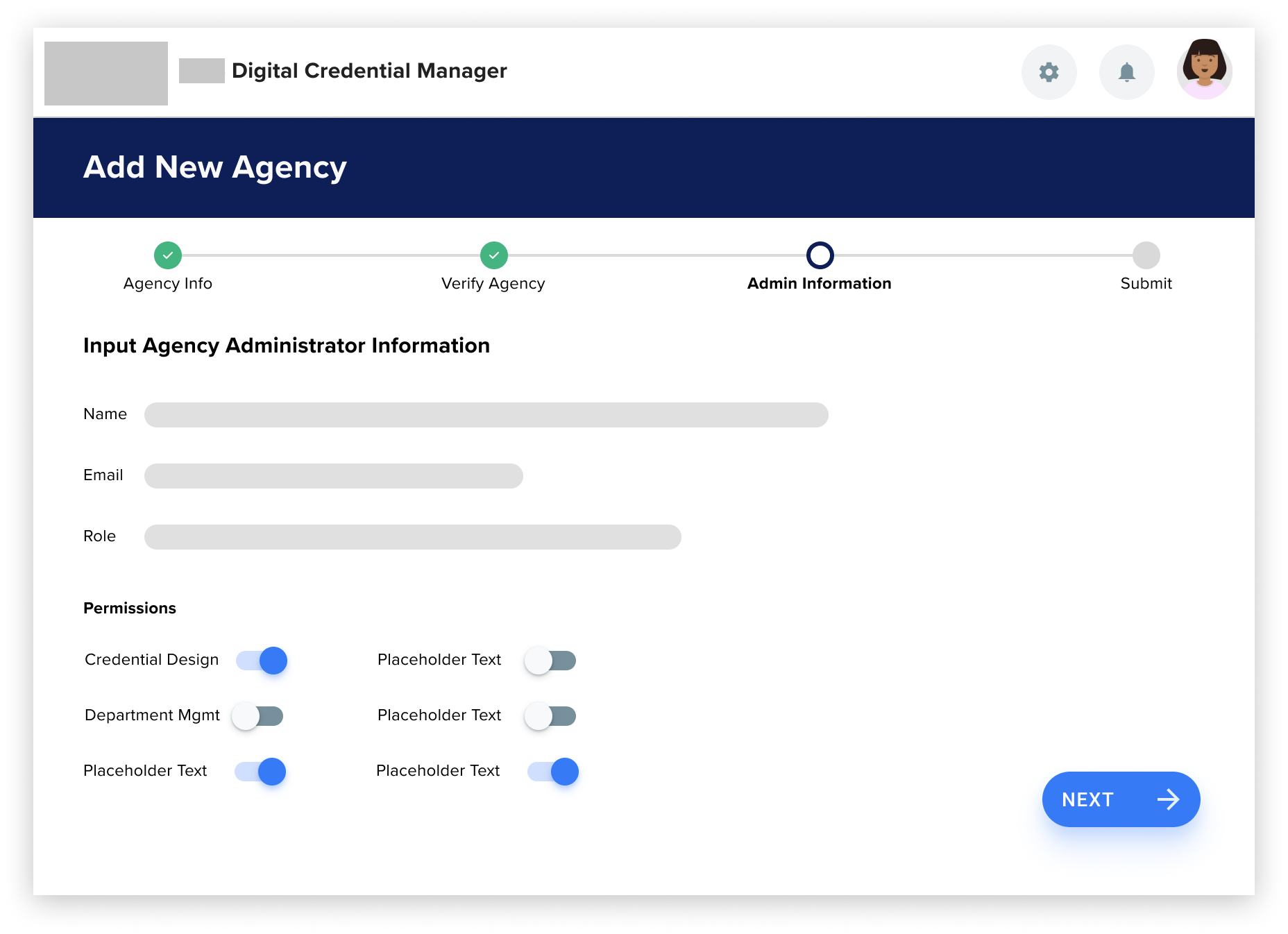
We created low-fidelity wireframes to communicate our vision for the digital credential manager. This alignment step ensured a shared understanding before progressing to detailed mockups.
Mockups
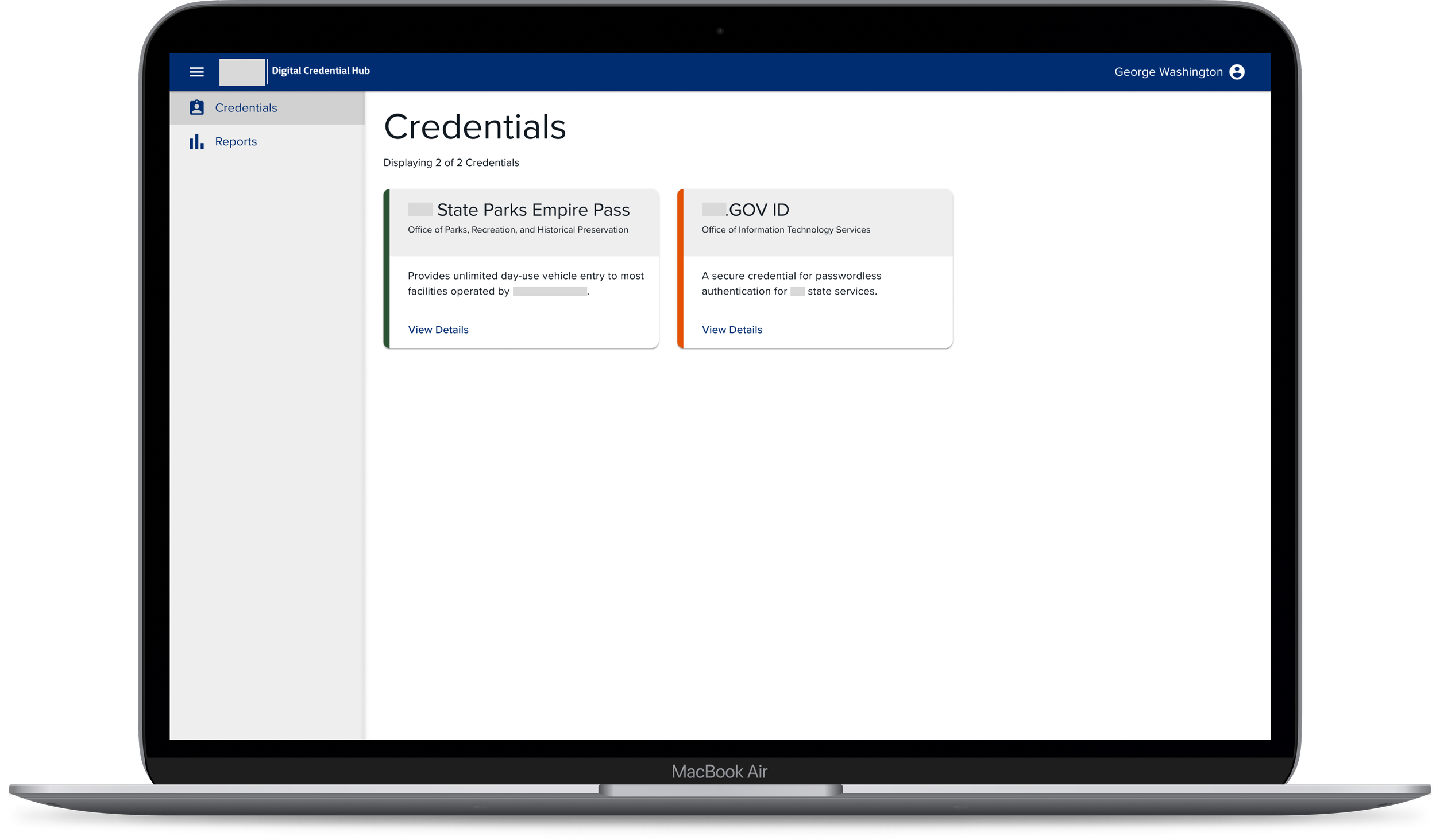
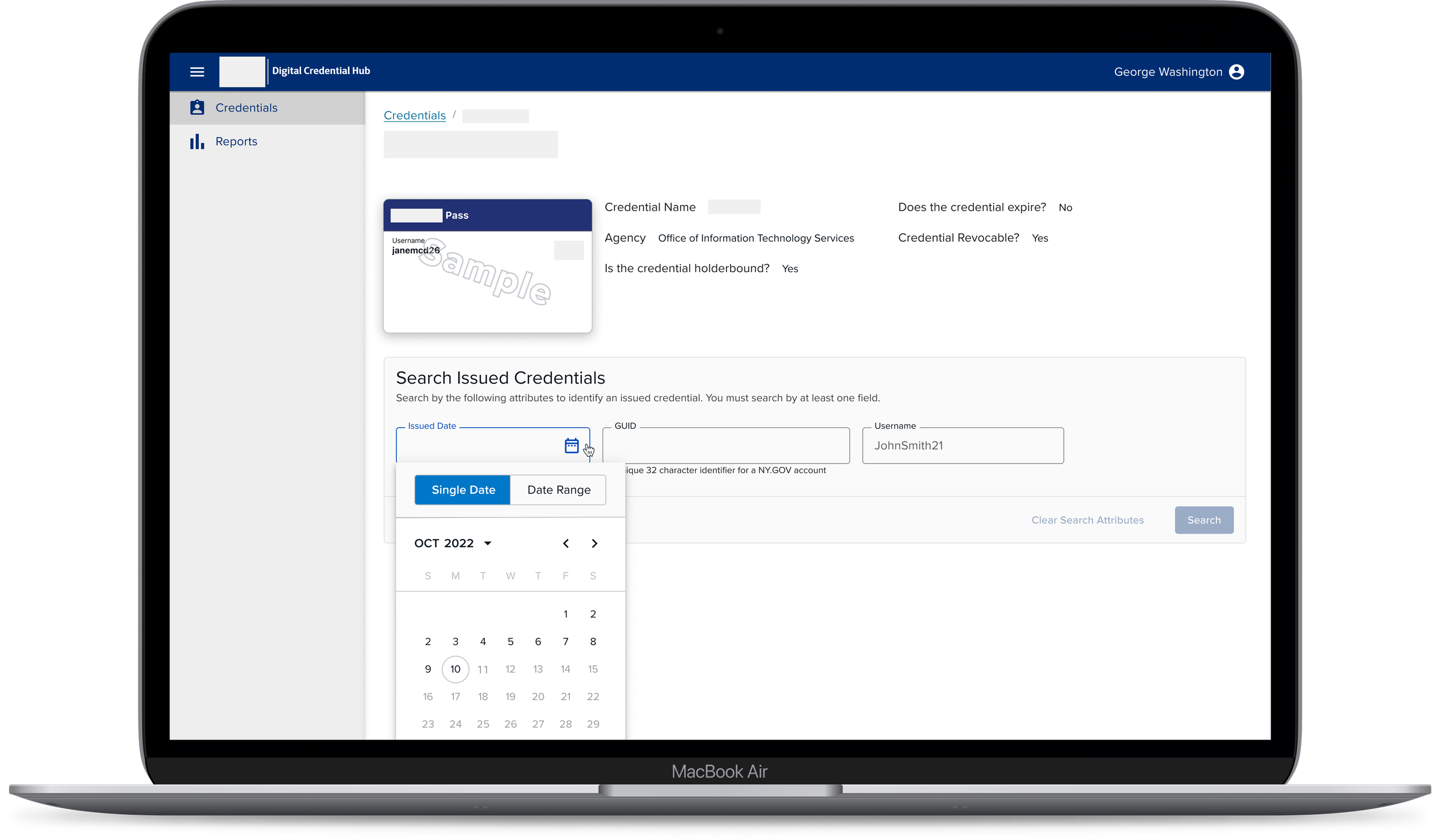
The Digital Credential Manager mockups translate functional requirements into intuitive interfaces. They effectively communicate design intent and guide development.

Development Handoff
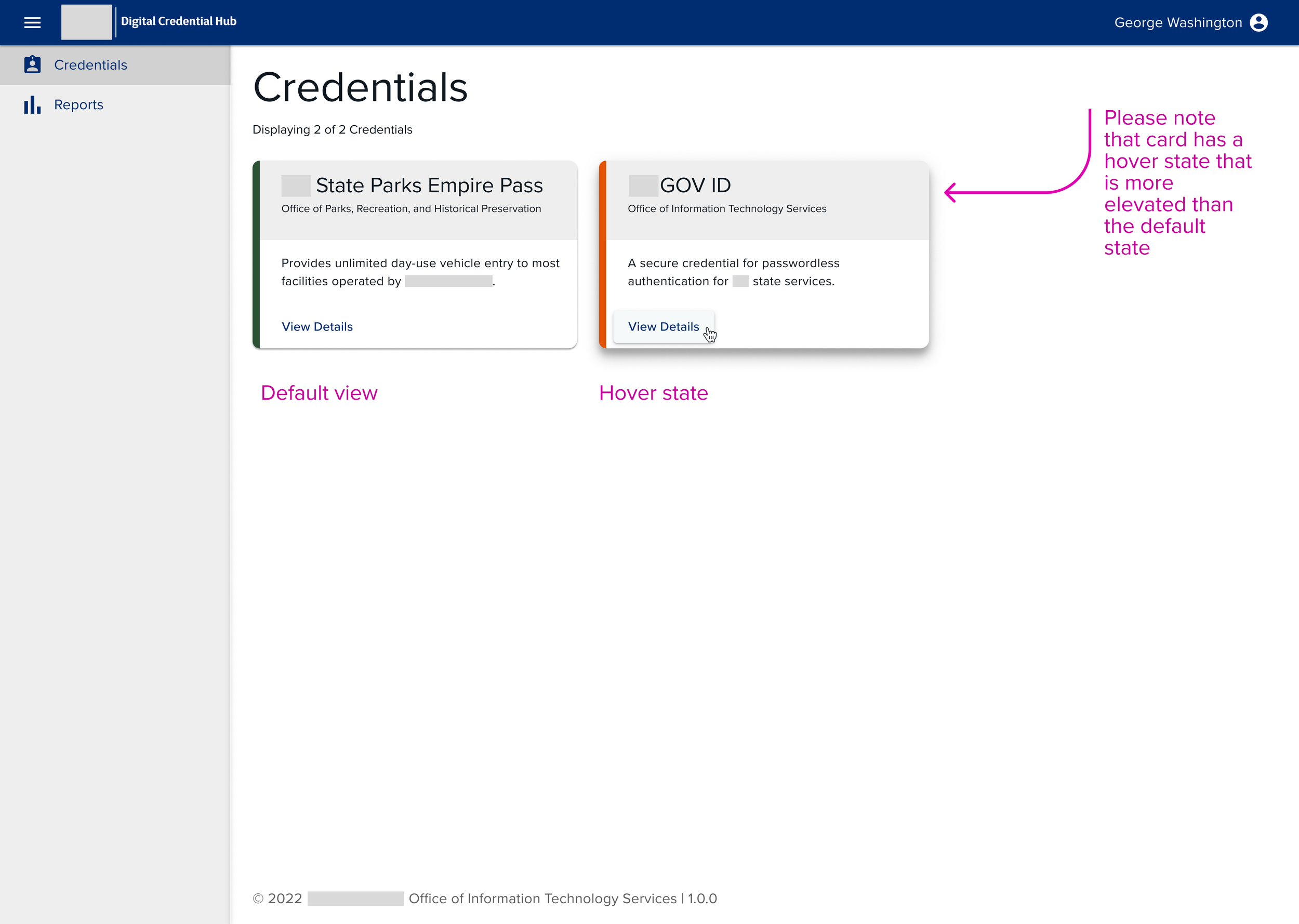
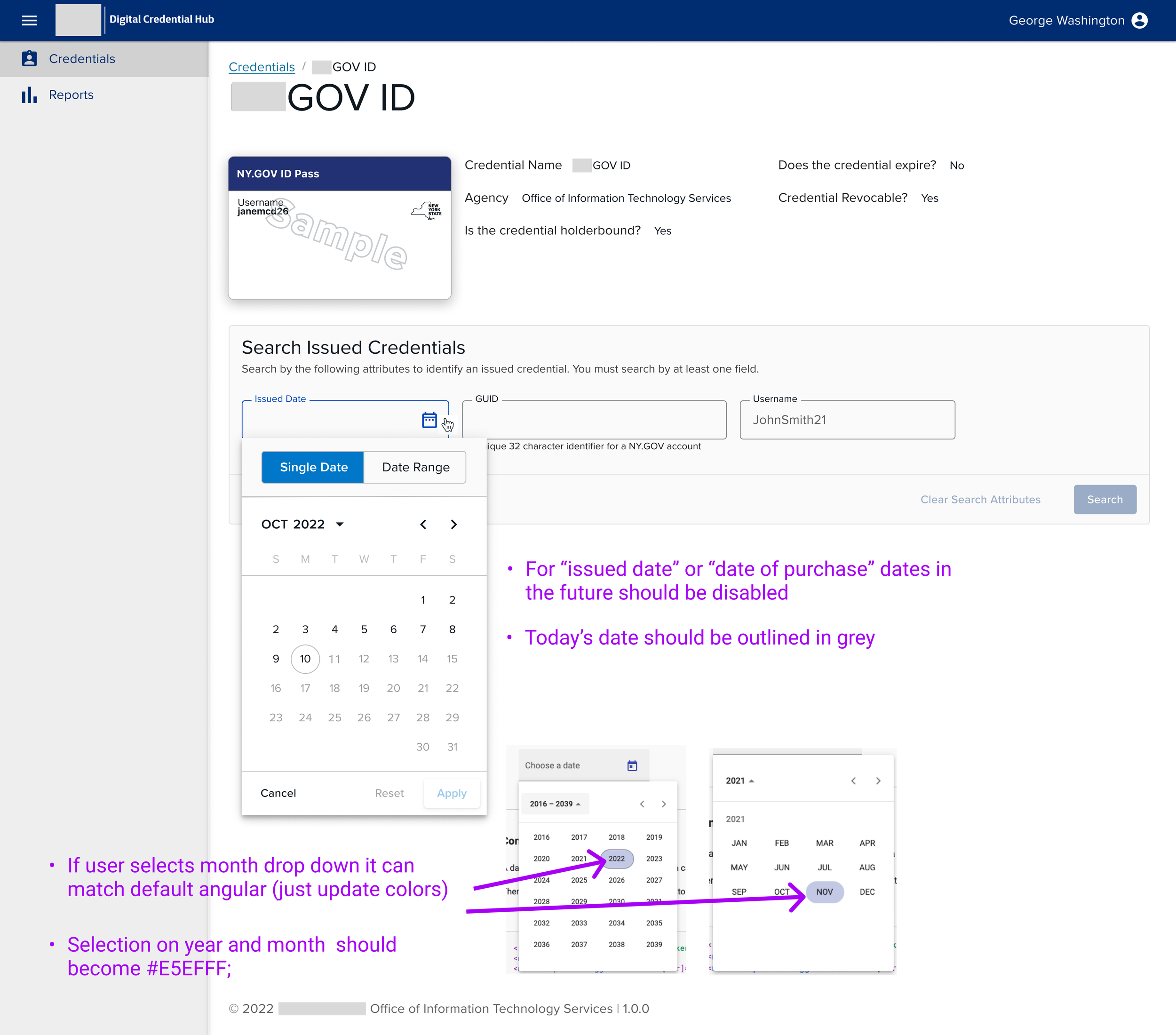
Securing client approval was a key milestone, validating our designs and enabling development to begin. To ensure a smooth handoff, we:
Defined breakpoints and designed responsive screens for each size
Red-labeled screens to clearly communicate interactive elements
Linked components, text, and color styles consistently
Established acceptance criteria for UI user stories